Osteoarthritis: Causes, Symptoms & Natural Remedies
- Posted On: July 13, 2026
- Posted By: admin
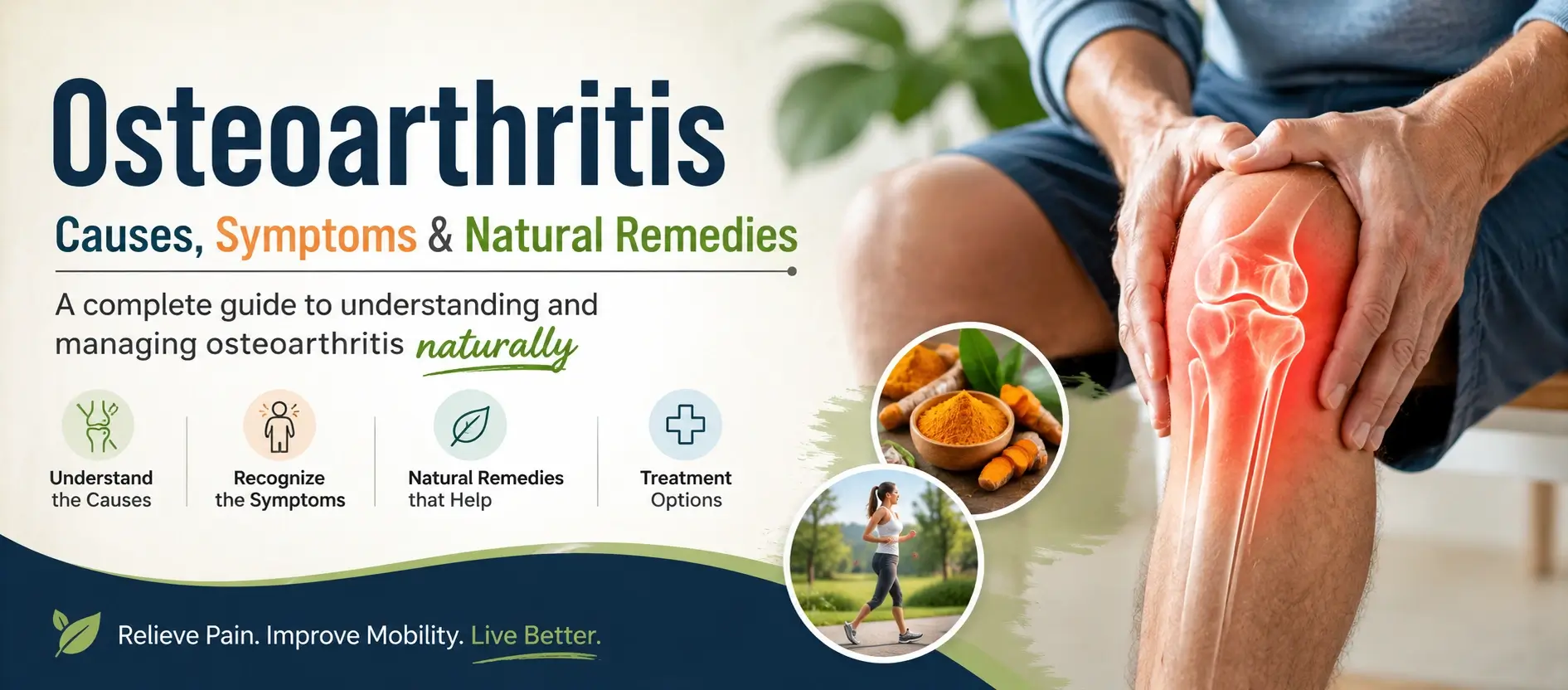
Osteoarthritis is the most common form of arthritis, and for most people it develops so gradually that the early signs — a stiff knee in the morning, a dull ache in the hands after a day of typing — are easy to dismiss until they become part of daily life. Understanding what’s actually happening in the joint, and which natural approaches have real support behind them, makes it easier to manage early rather than waiting until symptoms are severe.
What Is Osteoarthritis?
Osteoarthritis is a “wear and tear” joint condition in which the cartilage that cushions the ends of bones gradually breaks down, leading to friction, inflammation, and eventually bone-on-bone contact in more advanced cases. It’s distinct from rheumatoid arthritis, which is an autoimmune condition where the immune system attacks joint tissue directly — osteoarthritis is mechanical and age/use-related, while rheumatoid arthritis is immune-driven. The distinction matters because treatment approaches differ meaningfully between the two.
Causes and Risk Factors
- Age — cartilage naturally becomes less resilient over time, making osteoarthritis significantly more common past age 50.
- Joint injury — a past fracture, ligament tear, or repeated joint stress can accelerate cartilage breakdown years later.
- Excess weight — added load on weight-bearing joints (knees, hips) increases wear over time.
- Genetics — family history plays a measurable role in individual risk.
- Repetitive joint use — certain occupations and sports with repeated joint stress carry higher risk for specific joints.
Common Symptoms
- Joint stiffness, especially first thing in the morning or after sitting for a while
- Aching pain that worsens with activity and eases with rest
- A grating or crackling sensation (crepitus) with joint movement
- Swelling around the affected joint
- Reduced range of motion over time
Natural Remedies and Lifestyle Approaches
- Weight management: even modest weight loss meaningfully reduces load on weight-bearing joints and is one of the most consistently supported interventions for knee and hip osteoarthritis.
- Low-impact exercise: swimming, cycling, and walking maintain joint mobility and strengthen supporting muscles without the impact of higher-stress activities.
- Anti-inflammatory herbs: turmeric and Boswellia have some of the stronger research support among natural options for osteoarthritis pain specifically — see our full herbs for pain relief guide.
- Heat and cold therapy: heat before activity to loosen stiff joints, cold after activity to manage inflammation.
- Assistive devices: a cane, knee brace, or shoe inserts can meaningfully reduce joint load during daily activity.
Conventional Treatment Overview
For many people, conventional treatment starts conservatively — physical therapy, over-the-counter anti-inflammatories, and activity modification — before moving toward options like prescription medication, corticosteroid injections, or, in more advanced cases, joint replacement surgery. This is a decision path best walked through with an orthopedist or rheumatologist based on imaging and the specific joint involved, rather than self-diagnosed from symptoms alone.
When to See a Doctor
- Joint pain lasting more than a few weeks without improvement
- Swelling, redness, or warmth around a joint (which can also indicate infection or a different type of arthritis)
- Joint pain that’s significantly limiting daily activity
- Sudden, severe joint pain, which warrants prompt evaluation rather than a wait-and-see approach
Frequently Asked Questions
Is osteoarthritis the same as regular arthritis?
Osteoarthritis is one specific type of arthritis — the most common one — caused by cartilage breakdown from wear and use. “Arthritis” itself is an umbrella term covering more than 100 different joint conditions, including autoimmune types like rheumatoid arthritis, which are managed quite differently.
Can osteoarthritis be reversed?
Cartilage loss itself generally isn’t reversible with current treatments, but symptoms and joint function can often be significantly improved and maintained through weight management, targeted exercise, and appropriate medical care — many people manage osteoarthritis well for years without it progressing to needing surgery.
Do herbal remedies work as well as medication for osteoarthritis?
Herbs like turmeric show real, research-supported benefit for osteoarthritis pain, but effects are generally more modest and slower to appear than prescription anti-inflammatories. Many people use both together under medical guidance rather than choosing one over the other.
Medical Disclaimer: This article is for informational and educational purposes only and is not a substitute for professional medical advice, diagnosis, or treatment. Always consult a licensed physician before starting any herbal supplement, exercise program, or pain-management regimen — especially if you are pregnant, nursing, on prescription medication, or managing a chronic health condition.